Taking Care When Managing Continence
Click here to print the Taking Care when Managing Continence guide
Getting to the toilet on time may be difficult if someone has problems with strength, stamina or mobility or with memory, orientation and understanding.
It is important to empty the bladder and bowel regularly for general health, to stay continent and to avoid constipation and urine infections.
The following tips can make it easier to use the toilet safely and effectively.
A healthy diet with sufficient to drink is important for good bladder and bowel function. If someone’s diet or medical condition is affecting their continence, contact their GP or the Bladder and Bowel Service for advice.
The best position for going to the toilet is sitting down on the toilet with feet on the floor and knees level with the hips or higher than the hips. This position will help the bladder and bowel to empty properly. If the toilet seat is too high, it stops the bladder and bowel from emptying fully and this can lead to urine infections or constipation.
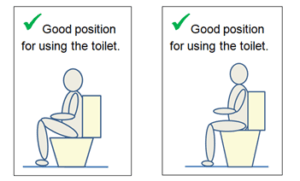
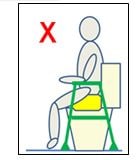
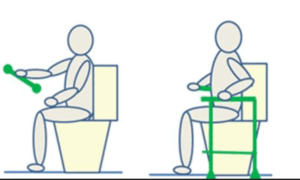
Getting on and off the toilet can be difficult and it may be tempting to add a high seat to the toilet to make this easier, but high seats prevent the bladder and bowel emptying effectively. If possible, instead of a high seat, use rails that fit around the toilet or rails fixed to the wall, to give a firm hold when getting up from the toilet.
Commodes can be useful, especially if someone’s bed or chair is a long way from the toilet. Most commodes can be adjusted so the height is right for effective use. Some are wheeled and can be positioned over the toilet. Commodes with a large bucket or chemical commodes are also available for times when the bucket can’t be emptied straight away.
Urinal bottles and other urinal containers are available for men and women and can be useful when it is difficult to get to the toilet. To make them easier to use and to prevent spills when emptying, some have lids or a collection bag attached and some are shaped for use when lying down. Disposable urinal bags are also available.
Clothes that are loose fitting with simple fastenings or elasticated waist, can help to get to the toilet in time. Longer zip fly fastenings are easier for men who stand at the toilet. Velcro tends to catch on other clothes and can come undone under pressure.
Pads might get in the way when going to the toilet; washable pants with a built-in pad, or stick on pads or pull up pads may be easier. Night-time pads are extra absorbent for greater protection and there are waterproof protection pads for use on beds and chairs. Be aware of the risk of skin damage when sitting or lying on extra layers or damp surfaces.
Cleaning after using the toilet can be easier if the toilet seat has a big opening. If it is difficult to hold toilet paper or to reach to clean effectively, there are bottom wiping gadgets, douche sprays and toilet bidets which may help.
Taking Care to Manage Continence when disorientated or forgetful.
Getting to the toilet on time can be affected by memory loss or disorientation. A person may not recognise the feeling that they need to go to the toilet; they may not remember to go regularly; they may not be able to find or recognise the toilet and may forget how to use it properly when they are there. Below are some useful tips which may help:
Remembering to go:
- Establish a routine of going to the toilet regularly.
- Set up reminder alarms on a mobile phone or interactive reminder screen.
- Written reminders may help, or audible and picture reminders can be set up on reminder screens.
Make sure the toilet is easy to find:
- Keep the route to the toilet clear and well lit, especially at night. Movement sensor plug in night lights can be useful to guide the way to the toilet and back to bed.
- Make sure the toilet door is visible, recognisable and easy to open and close.
- The toilet should be clearly recognisable as a toilet. Unusual coloured seats can be distracting especially if the colour is not one that is usually associated with the toilet.
- Keep the toilet area uncluttered so that there are few distractions.
Help to adjust clothing:
- Familiar clothing, with elasticated waist or simple fastenings are easier to get on and off successfully. Velcro tends to catch on other clothes and come undone under pressure.
- If pads are needed, washable pants with built-in pads, or all in one pull up disposable pads, or adhesive pads that stick onto pants are easier when getting to the toilet.
How to help someone if they struggle to use the toilet effectively:
- Give the person privacy and time to use the toilet and fully empty their bladder and bowel in a calm environment.
- When sitting on the toilet the person may need reminding to use it.
- If guidance is needed, use clear instructions with familiar phrases.
- Encourage the person to lean forwards, if safe to do so, when sitting on the toilet, to create gentle downward pressure that helps the bladder and bowel to empty.
If the person has a medical condition that is affecting continence; Contact their GP or a nurse from the Bladder and Bowel Service for advice.